

Solution-focused hypnotherapy and emergency services well-being

Emergency services professionals spend their days in circumstances that others will never experience. Working long shifts, facing the unexpected at a moment’s notice, and making fast decisions can become an everyday routine. To an outside observer, this may seem like a normal job, but in reality, stress can quietly build up over time.
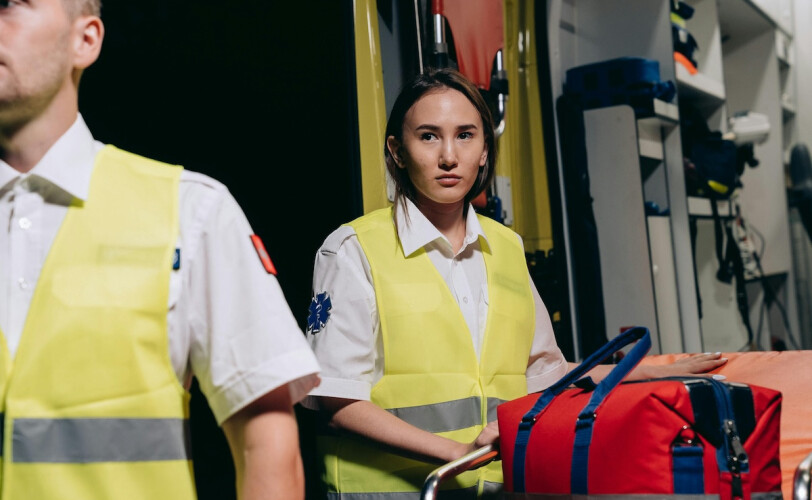
Professionals in emergency care spend their days in a constant stream of adrenaline, responsibility, and emotion. Even when a shift ends, the nervous system may not completely settle down. This can impact sleep, concentration, relationships, and overall well-being.
Learning how continued stress and pressure can take their toll on the mind and body can help make sense of experiences and reduce unnecessary self-criticism.
Life on red alert
Professionals in frontline roles will often experience a conflict of holding responsibility for people and dealing with uncertainty, ambiguity, and potential risk. This is something to be proud of, but the continual pressure of the role can build up over time, especially where there is little time to decompress fully between shifts.
Individuals who work in emergency services commonly talk about:
- struggling to sleep or disrupted sleeping patterns
- feeling permanently “on edge” or alert, even on days off
- mental playback of incidents or decisions
- physical and emotional burnout
- disconnecting from life outside of work
Responses such as these are not a sign of personal weakness. They are a common human response to accumulated exposure to highly stressful, emotionally intense, and high-stakes environments. The use of shift work and the impact on a person’s natural rhythms can increase this experience.
The nervous system and stress
Our nervous system is primed to be able to respond to threat, but in short bursts. In emergency services, it can remain in that heightened state of alert for extended periods of time. The longer that continues, the more difficult it can be for the nervous system to calm down and return to a resting state.
If the nervous system is unable to shift out of a continual state of alert, an individual might notice low energy, a longer wind-down from stress, and difficulties accessing a calm or wider perspective. Helping the nervous system to settle is therefore a useful aim of working with frontline workers.
What is solution-focused hypnotherapy?
Solution-focused hypnotherapy (SFH) is a structured, future-focused approach which supports emotional well-being by helping the brain and nervous system move from a state of constant threat-based responding towards more flexible, balanced ways of thinking and responding.
SFH doesn’t explore problems or revisit past experiences. Instead, it focuses on what a person would like to move towards. Sessions ask what feeling steadier, calmer, or more confident would look like in everyday life, and what is already working, however small or infrequently in the midst of ongoing pressure.
Sessions also use trance as a way of supporting learning and change. Trance is a natural state of absorbed attention, and is similar to becoming deeply engaged in a book, film, or piece of music. In this state, the nervous system can settle, and the mind becomes more open to new perspectives and suggestions.
Therapeutic suggestions in SFH are designed to help the brain practise different responses, for example, noticing safety rather than threat, or allowing the body to settle more easily after stress. Repeatedly experiencing these calmer and more balanced states over time can support the development of new habits of thinking and responding, so they become easier to access outside of sessions.
This is not a process of forcing change or “positive thinking”. It works by helping the brain experience alternative ways of responding, so that feeling calmer, clearer, or more grounded becomes more familiar and accessible. Individuals are aware and in control throughout, and trance is used as a supportive tool rather than as a passive state.
Why might solution-focused hypnotherapy be useful for emergency services professionals?
Professionals working on the frontline are highly capable of performing under pressure. For the same reason, those strengths can mean that it can be difficult to recognise the impact of stress or to prioritise rest and recovery.
SFH does not require re-living traumatic experiences or the detailed processing of past events. It can provide an opportunity to rest the mind and support a return to balance.
It could be an approach that is suitable for individuals who notice:
- adrenaline taking a long time to leave the system after shifts
- mental “fog” or a lack of clarity under pressure
- low confidence after difficult incidents or days
- low energy or motivation outside of work
- feeling unable to disconnect from a professional identity
The aim is not to change who someone is, but to support the nervous system in being able to access a steadier, more balanced internal state.
Areas of support
In a solution-focused framework, support may centre on:
- cultivating a calmer mindset after demanding shifts
- settled sleep
- mental clarity
- physical and emotional energy to live life outside of work
- regaining balance between professional responsibility and personal well-being
Small, gradual shifts can make difficult days more manageable and help an individual to have the capacity to enjoy more time away from work.
A flexible, supportive framework
SFH sits between coaching and therapy in its structure. It is goal-oriented and practical, but also allows space for rest and mental regulation. Rather than a step change, progress is seen as a series of small, steady steps.
Sessions are designed to be flexible and can be adapted around shift patterns and different schedules, which may be particularly important for Emergency Services Professionals.
A complementary approach
SFH is a complementary approach for emotional well-being. It does not replace medical or psychological care and is not used in the diagnosis or treatment of medical conditions. If individuals have concerns about their health, they are encouraged to seek the appropriate medical care.
Emergency services professionals give so much of themselves in their roles, and approaches that support nervous system regulation and balance can play a valuable part in supporting long-term well-being.

Find the right hypnotherapist for you
All therapists are verified professionals


