

Breathe better, feel better: the science of breath and stress

We breathe about 20,000 times a day, usually unconsciously, without giving our breaths a second thought. But what if something we do so automatically could also become one of our simplest and easiest tools for managing anxiety and stress and helping our bodies regulate to enter a calmer state?
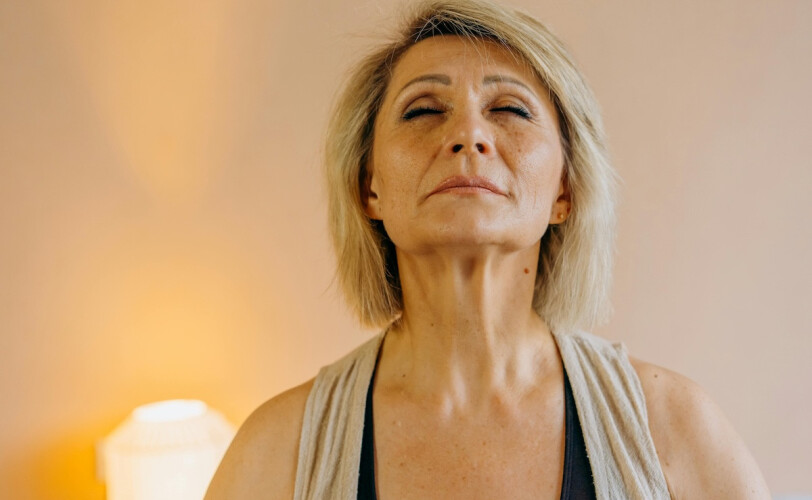
You’ve probably heard therapists, doctors, or wellbeing professionals recommend breathing exercises when you’ve felt anxious or overwhelmed. You may have asked, but how will that even help me?
And yes, it can sound almost too simple. But breathing comes up so often for a reason: it's recommended as a coping strategy and a tool to calm our minds and bodies.
What's the science?
Breathing is connected to the autonomic nervous system, which regulates many of the things our body does on autopilot, including heart rate, breathing, and digestion. This system has two main branches: the sympathetic nervous system and the parasympathetic nervous system.
A simple way to think about them is that your sympathetic nervous system acts like your body's accelerator, like putting your foot on the gas pedal in a car. It helps prepare you to respond when your brain perceives a threat or challenge, and that response can be fight, flight, freeze, or fawn. Your heart rate can increase, your muscles might tense, and your breathing can quicken to help you step into that mode.
Your parasympathetic nervous system is more related to resting, relaxing and regulating. Think of it as helping you take your foot off the accelerator and letting your body shift into a calmer state. In this state, we enter rest and digest: heart rate slows, muscles relax, and stress hormones drop, since there is no need to respond to danger.
It's an evolutionary mechanism, and we need both systems to function because they've helped us survive. The difficulty comes when your stress response keeps activating because of ongoing pressure, worrying thoughts, panic sensations, or feeling overwhelmed by general life problems like money, relationship difficulties, and work pressures.
And this is where your breathing becomes really interesting. When you’re stressed, frightened, or anxious, your breathing can change without you consciously deciding to. It may become faster, shallower or more focused in your chest. Some people notice it; others don't. This can work both ways. Your state can influence your breathing, and your breathing can also influence your state.
Your breath and your brain: a two-way conversation
We often think of the brain as being in charge of the body, but breathing is part of a two-way conversation between the brain and body, with each influencing the other.
When you perceive danger or feel anxious, your sympathetic nervous system prepares your body to respond. Your heart rate can increase, your muscles may tense, and your breathing can become quicker. This is useful when you genuinely need to respond to a threat. The problem is that our stress response doesn't only switch on when we're facing physical danger; it can also be triggered by our own thoughts, to the point that it becomes hard to turn off.
This is where intentional breathing can become useful. Slowing your breathing, especially by making the exhale gentle and slightly longer than the inhale, can help shift your body toward a calmer physiological state. Instead of trying to think yourself calm, you give your body a physiological regulation strategy to use.
Why does a longer exhale matter?
You might have noticed that many breathing exercises tell you to make your exhale longer than your inhale. But why?
When you inhale and exhale, your heart rate naturally changes slightly with your breathing. It tends to increase during inhalation and decrease during exhalation. This is known as respiratory sinus arrhythmia and is one way your breathing interacts with your autonomic nervous system.
When you slow your breathing and gently extend the exhale, you can increase this rhythmic variation in heart rate and influence cardiac vagal activity – activity associated with the vagus nerve and parasympathetic regulation. This is one reason slow breathing is associated with changes in heart rate variability.
The important part is that the exhale should feel comfortable and unforced. You don't need to push all the air out or hold your breath for an uncomfortable amount of time. For example, inhale gently for four seconds, hold for a few seconds and exhale slowly for six seconds. The aim isn't to take a huge breath in. The aim is to slow the breath, make it quieter and more comfortable, with the exhale taking a little longer.
Over time, practising this can help you become more familiar with the physical experience of moving from a state of activation towards better regulation.
Meet your nervous system's calming pathway
One reason breathing has attracted so much interest from researchers is its relationship with the autonomic nervous system. Slow, controlled breathing can increase parasympathetic activity and influence heart rate variability (HRV), a measure of variation in the time between heartbeats.
Higher HRV is generally associated with greater physiological flexibility, essentially, your ability to adapt to changing demands. This, of course, doesn't mean that one breathing exercise will magically switch off anxiety or fix a problem. Instead, think of breathing as a training tool. The more you practice noticing your breathing and deliberately slowing it down, the more familiar the process becomes.
The breath-anxiety loop
Have you ever noticed that when you become anxious, your body starts producing sensations that make you even more anxious? Perhaps your heart starts racing. You might feel tight in your chest. You may start to feel dizzy or light-headed. Your breathing changes.
You notice the sensations and think: “Something is wrong.” However, this may also happen unconsciously. That thought creates more anxiety, which creates more physical sensations. And the cycle then continues. An anxious thought can change your breathing, triggering physical sensations that increase your sense of threat and fuel more anxious thoughts. This can become a self-reinforcing loop.
Learning to recognise your breathing as part of that cycle gives you another point to intervene. Instead of fighting the sensations or reacting immediately, you can pause, notice what is happening, and begin to regulate your mind and body through breathing.
How breathing can help you feel more in control
Breathing is fascinating because it sits somewhere between conscious and unconscious control. You don't need to remember to breathe. Your body does it automatically while you're sleeping, working, talking and reading this article.
But you can also deliberately change your breathing. That makes it a particularly accessible form of self-regulation. For example, you might experiment with:
Box breathing
Inhale for four seconds, hold for four, exhale for four, hold for four. This can provide structure and something to focus your attention on when you feel overwhelmed.
Resonant or coherent breathing
Slowing your breathing to around five–six breaths per minute can encourage a steady rhythm and has been associated with changes in HRV.
Longer-exhale breathing
Try inhaling for four, holding for a few seconds and exhaling for six. Keep the exhale slow, soft, and comfortable, rather than forcing the air out. The slightly longer exhale can help slow your overall breathing rate and influence the interaction between your breathing, heart rate and autonomic nervous system.
The physiological sigh
Take a deep breath, then take a second, smaller inhale, and slowly exhale. Researchers have paid attention to this technique for short-term stress regulation, and it can be particularly useful when you need a quick reset.
No single breathing technique works for everyone. The aim isn't to force your breathing into a particular pattern. It's to find an approach that feels comfortable and useful for you.
Try it now
Before reading any further, take a moment. Close your eyes. Let your shoulders drop. Relax the muscles in your body. Scan for any tension that you can notice.
Breathe in gently through your nose for around four seconds. Then allow your exhale to be slow for around six seconds.
You don't need to take an enormous breath. In fact, bigger isn't necessarily better. Just make the next few breaths a little slower and softer.
Now notice:
- Has your jaw relaxed?
- Have your shoulders dropped?
- Does your chest feel different?
- Has your heart rate changed?
- Do you feel slightly more present?
You may notice a subtle shift, or you may not notice much at all. That's OK. Breathing isn't about forcing yourself to feel calm. It's about practising the ability to influence your physiological state and increasing your overall awareness of what is happening in the body.
What does the research tell us?
Research on slow breathing has examined its effects on stress, anxiety, HRV, attention, and emotional regulation. Studies have found that slow, controlled breathing can influence autonomic nervous system activity and may help reduce subjective stress and anxiety.
There is also growing interest in how breathing interacts with brain regions involved in emotion, attention, and interoception – our ability to notice signals from inside the body. This is particularly relevant to anxiety and stress. The earlier you notice your heart speeding up, your breathing changing, or your muscles tensing, the sooner you can respond instead of automatically reacting.
Why practice breathing when you're not stressed?
This is one of the most important parts. Many people only reach for breathing exercises when they're already panicking. I always tell clients to try to incorporate it into their weekly routine to help bring down stress hormones throughout the week.
If you only practice a coping strategy during a crisis or when things become too difficult to manage, you're asking yourself to learn a new skill at exactly the moment your nervous system is under the most pressure. Regular practice changes that. Think of it like learning any other skill. You don't wait until you're running a marathon to start training your legs.
A few minutes of breathing practice when you're relatively calm gives you a chance to get familiar with the technique, notice what works for you, and build it into your routine. Then when something stressful happens, the skill is already familiar.
From breathing to self-regulation
Breathing isn't a magic cure for anxiety, and it doesn't replace appropriate medical or psychological support. But it can become one useful piece of a much bigger toolkit. With regular practice, you can become more aware of your body's early stress signals and regulate yourself more effectively.
You may notice tension building, changes in your breathing, racing thoughts and an increasing urge to react. You then begin to recognise that sequence earlier. That creates a pause. And sometimes, that pause is exactly what you need. Instead of automatically following the anxious thought, you can breathe, notice what is happening, and choose what to do next.
Breathing isn't a cure for all problems, but it is one of the few tools for influencing the stress response that you can access almost anywhere, at any time and an amazing coping strategy. And the more you understand the connection between your breathing, body and mind, the more deliberately you can use it.
Find the right hypnotherapist for you
All therapists are verified professionals


