

When children worry they’re not good enough

I recently had the privilege of working with Timmy, a bright nine-year-old boy who was experiencing anxiety about school and becoming increasingly worried about his future.
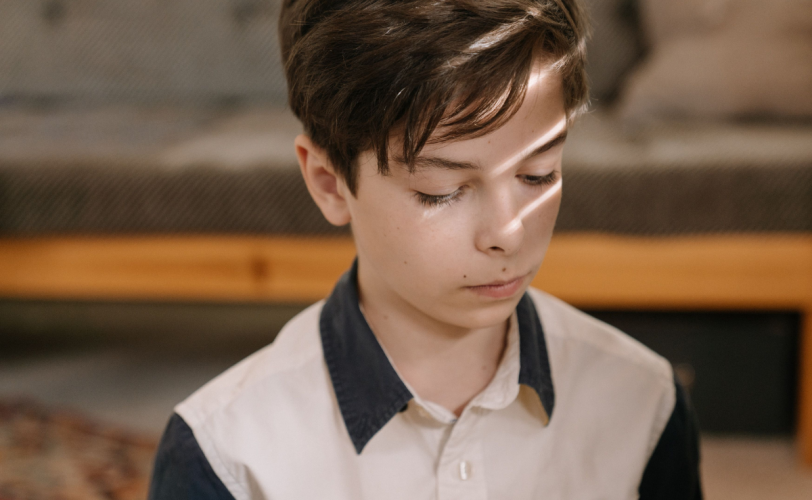
At just nine years old, Timmy was already frightened that he would fail exams he would not sit for several years. After watching his older sister struggle with GCSE stress and receive private tuition, he began to wonder why he wasn't getting the same help. Did his parents believe in him, and would he ever be good enough to achieve his dream of becoming a Michelin-starred chef?
Timmy’s story reveals how easily children can absorb the anxiety around them and how age-appropriate hypnotherapy can help them feel calmer, more confident and hopeful about their future.
Timmy's story
Although Timmy was still several years away from taking his GCSEs, he had seen the stress and anxiety his older sister was experiencing while preparing for hers. Children are often highly sensitive to the emotions and conversations around them, and Timmy had begun to absorb some of his sister’s worries.
His sister was receiving private tuition to support her through her exams. Timmy’s parents believed he was doing well academically and didn't need additional tuition. However, Timmy interpreted the situation differently. He felt left out and began to wonder whether he was receiving enough help.
In his young mind, private tuition had become connected with being successful. He worried that without the same support, he might not be good enough, might fail his exams and might not achieve the future he wanted.
His anxiety was not simply about what was happening at school now. He was already imagining problems that might occur many years later.
Looking beyond the anxiety
When I first met Timmy, I did not begin by focusing entirely on what was wrong. Instead, I asked him a very important question: “What would you like to be when you leave school?” Timmy told me that he wanted to become a chef in a top Michelin-starred hotel or restaurant.
This gave us something positive and exciting to work towards. Rather than allowing his mind to continue imagining failure, we began helping him imagine a future filled with opportunity, learning and achievement.
We talked about what makes a successful chef. A great chef does not need to know everything at nine years old. They learn gradually. They practise, make mistakes, receive feedback and continue improving. Every new skill becomes another ingredient they can use in the future.
This helped Timmy understand that his future would not be decided by one lesson, one test or even one set of exams. His future would be created through all the small steps he took along the way.
Every child needs different support
It was also important for Timmy to understand why his sister was receiving private tuition. Her support was not evidence that she was more important, more capable or more deserving than him. She was at a different stage of her education and needed a particular kind of help at that time.
Fairness does not always mean giving every child the same thing. It means recognising what each child needs and supporting them as an individual. Timmy was bright and capable, but he still needed reassurance, encouragement and the opportunity to talk about his worries. Children do not have to be struggling academically to need emotional support.
Using hypnotherapy to build confidence
During our work together, I used age-appropriate hypnotherapy, positive imagery and gentle coaching techniques to help Timmy feel calmer and more confident.
Hypnotherapy with children is not about taking away their control. It can involve relaxation, imagination, metaphors and stories that help a child consider their situation differently.
We used Timmy’s ambition of becoming a chef as part of this process. He could begin to imagine himself growing older, learning new skills and becoming more confident. He could picture himself in a professional kitchen, calmly preparing wonderful food and feeling proud of everything he had achieved. Instead of repeatedly imagining himself failing, he could begin rehearsing a more positive future in his mind.
We also worked on helping him recognise that anxious thoughts are thoughts, not predictions. Just because his mind produced a frightening "What if?” did not mean it would happen.
“What if I fail?” could begin to change into:
- “What if I learn?”
- “What if I receive the help I need?”
- “What if I become really good at what I love?”
- “What if I succeed?”
How can neuro-linguistic programming (NLP) help?
Neuro-linguistic programming, commonly known as NLP, is a coaching approach that explores how our thoughts, language and learned patterns can influence how we feel and behave.
Neuro refers to our thoughts and how we process experiences through our senses. Linguistic refers to the language we use when speaking to ourselves and others. Programming describes the patterns, habits and beliefs we develop throughout our lives.
NLP techniques can help people recognise unhelpful patterns, look at situations from a different perspective and develop more positive ways of responding. When used with children, the techniques can be adapted through simple language, imagination, stories and age-appropriate activities to help them feel calmer, build confidence and manage anxious thoughts.
Anxiety can make children grow up too quickly
Children sometimes carry worries that belong much further into the future. They may hear conversations about exams, money, employment or university and believe they must solve everything immediately.
Timmy did not need to plan his entire career at nine years old. He needed permission to be nine, to learn, play, explore his interests and enjoy school one step at a time.
Our work helped him begin separating his sister’s experience from his own. Her anxiety did not have to become his anxiety, and her educational journey did not predict what would happen in his future.
Recognising anxiety in children
Childhood anxiety does not always look like fear. It may appear as irritability, anger, tearfulness, perfectionism, disrupted sleep, stomach aches, headaches, school avoidance or repeatedly asking for reassurance.
A child may say, “I don’t want to go,” when they really mean, “I am frightened that I will not cope.” They may say, “I can’t do it,” when they are actually asking, “What if I am not good enough?” Looking beyond the behaviour can help adults understand what the child may be trying to communicate.
Helping children feel heard
One of the most valuable things we can give an anxious child is a safe space in which they feel heard without being judged.
Adults may know a nine-year-old doesn't need to worry about GCSEs yet, but simply saying, “Don’t worry about that,” may not settle the child’s nervous system. To them, the fear feels real. By listening carefully, acknowledging the emotion and helping the child develop a different way of thinking, we can begin to reduce the power of those worries.
Timmy’s story is an important reminder that children notice far more than we sometimes realise. They may absorb the stress of siblings, parents, teachers and friends without fully understanding where those feelings came from.
With appropriate support, children can learn that they do not have to carry somebody else’s anxiety. They can develop confidence in their own abilities, ask for help when they need it and look towards their future with curiosity rather than fear.
If your child is becoming anxious about school, exams or their future, they do not have to wait until the anxiety reaches a crisis point before receiving support. An initial conversation can help you explore what they are experiencing and whether age-appropriate hypnotherapy or NLP coaching may be suitable.

Find the right hypnotherapist for you
All therapists are verified professionals


