

Health anxiety: a vicious cycle

If you've spent years Googling physical symptoms and self-diagnosing, you probably feel as though you're stuck in a loop.
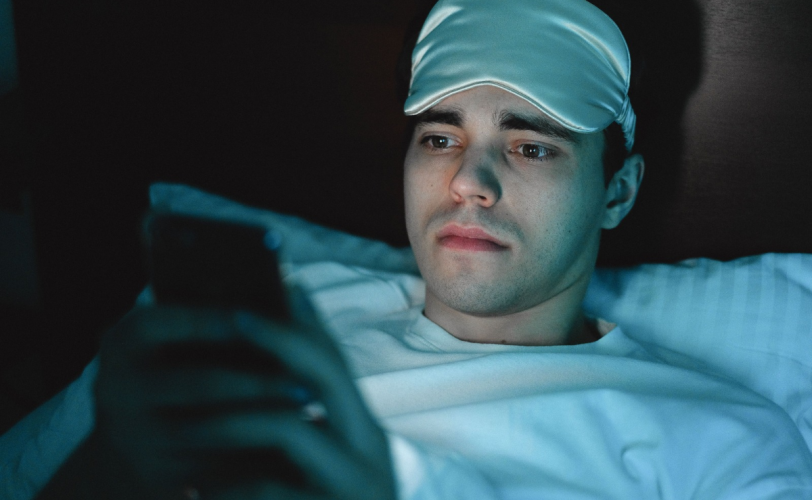
Does this sound familiar?
- You have an 'abnormal' bodily sensation – burning, pain, twitching, itching, increased heart rate, etc.
- Your mind immediately tries to figure out the why, and within no time, it's a catastrophe, an incurable disease.
- And now that you believe that, anxiety and fear kick in.
- The stress response might cause other physical symptoms like a racing heart and headaches, and it might also amplify the initial symptom.
- Now you have 'proof' that something is truly wrong.
- You engage in safety behaviours. Googling, seeking reassurance from doctors or family, and avoiding situations that might trigger symptoms.
- Short-term relief. Phew.
- The relief you felt reinforces the behaviour – checking, confirming, seeking comfort.
- Your brain becomes even more vigilant. Now it believes that bodily sensations are threats worth monitoring, and so it starts scanning your body even more closely. You notice more sensations than before.
- The new symptoms are the new triggers now – go back to the top of this list.
If you recognise yourself in this, you may be experiencing health anxiety.
Health anxiety and the nervous system
So what's going on? Why have you been dealing with health anxiety for years, even decades? Will this ever go away? Can anyone ever understand the anxiety, the obsession, the pain of these years? The days when you isolated yourself from your children or partner, Googling symptoms and diagnosing yourself with illnesses that you only just learned about on Google?
To begin with, your nervous system is stuck on high alert. It is constantly scanning your environment for danger. It's trying to find the smallest thing that could be defined as danger.
To give you an analogy, imagine an over-sensitive smoke detector that goes off at the faintest hint of smoke. When the toaster pops up toast, when you breathe out vapour in winter, when the kettle boils. It's doing its job too well. So perfectly that it's forgotten the bigger picture: looking out for fires, not whiffs of smoke. That's what your nervous system is doing. Going off at the smallest sensation it can feel.
OK, I get it, but why health anxiety?
Health anxiety is your anxiety making itself known. If not health anxiety, it could have manifested as social anxiety, driving anxiety or perhaps even an unhelpful coping mechanism like drinking or eating.
The answer to, "Yes, but why does my anxiety manifest itself as health anxiety?" can be nuanced and complex. To begin with, your body is always available to observe, and it's complex and changes every day, so it becomes an easy target.
One common reason I see in my practice for why someone develops health anxiety is having seen a parent or close relative going through a physical illness or issue that they weren't able to make sense of at the time. Perhaps they were too young or just didn't have enough tools to make sense of it (like most of us).
Another reason I see is linked to other existential reasons, like maybe you have children and something happening to you now has a completely different meaning and impact? There could be several other reasons, including existing health issues that might be the root cause of this anxiety.
How can we break this vicious cycle of health anxiety?
The way I work with clients in my practice is to assess the problem and then use hypnotherapy and other tools to calm the nervous system.
Your nervous system quickly realises it can be calm, too. Revelation! People tell me they haven't felt as calm in years as they do after a hypnosis session. While we work on calming your nervous system, we also challenge unhelpful thought patterns and begin to change them.
The deeper work starts after that: understanding where this wound comes from. Without that, any relief you get is likely to be temporary. That might mean making sense of something that happened in the past – perhaps something from childhood, a previous relationship, a loss, or a period of your life you've never quite processed – so that the anxiety you feel today can finally be understood in context. We explore what first taught your nervous system to be on guard, so the change you make can last.
Health anxiety can be managed and transformed with the right support. Taking the first step towards seeking support can feel daunting, but working with a hypnotherapist may help you manage health anxiety and feel more in control.

Find the right hypnotherapist for you
All therapists are verified professionals


