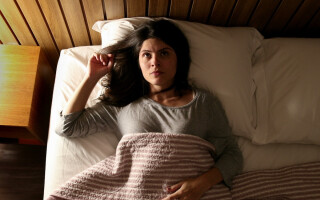
Why do I always imagine the worst?

Imagine your partner is late home and hasn't replied to your message. Or perhaps you said something in a meeting, and you are not quite sure how it was received. Or maybe it's your child, quieter than usual, possibly worried about something they cannot quite put into words. Nothing has actually gone wrong. And yet the mind is already three steps ahead, writing a story about everything that could go wrong.

If that sounds familiar, you are not alone. Worst-case scenario thinking is one of the most common experiences people describe when they talk about anxiety, and the question almost everyone asks is the same: Why does my mind keep doing this? The answer might surprise you. And once you understand it, something often shifts.
Your mind is trying to protect you
Your mind is not broken. It is doing its job. Here is something that often surprises people. The part of the mind that catastrophises, that runs worst-case scenarios, that wakes you at three in the morning with a list of everything that might go wrong, it's not malfunctioning. It is working exactly as it is designed to.
Your unconscious mind has one overriding priority: to keep you safe. And its way of doing that is to anticipate danger before it arrives, to scan the horizon, to ask "what if", just in case the answer matters.
In many situations, this is genuinely useful. That quiet sense of unease that makes you pause before making an important decision, or trust your instincts when something does not feel right, that is the same protective instinct at work.
The problem is not the instinct. The problem is when the dial gets stuck, and the mind starts running that scanning process in situations where there is no real danger at all. And so it stays on alert, searching for something to protect you from, even when there is nothing there that needs your attention.
Why do anxious thoughts feel so real?
Anxious thoughts do not feel like imagination, but that is exactly what they are. They are not an emergency. They are not a forecast of what is about to happen. They are simply thoughts, generated by a mind that is trying its best to keep you safe.
And yet they arrive with a certainty and a weight that makes them feel completely true. The reason for this is that the unconscious mind does not distinguish particularly well between something that is actually happening and something it is vividly imagining.
When you picture a worst-case scenario in detail, the mind and body respond as though it is real. You may notice the heart rate rises, the stomach tightens or perhaps the breathing changes. And that physical response then feeds back into the thought, making it feel even more credible.
This is why reassurance so rarely works for long. And the same is true of affirmations. You can repeat positive statements to yourself, or have someone tell you everything is going to be alright, and you might believe it for a moment, but the body is still sending signals that something needs your attention, and the mind goes straight back to searching for what it might be. The surface has been addressed, but the controlling pattern underneath has not.
It is not a character flaw. It is not a weakness. It is simply a thought. And thoughts can change.
Understanding patterns in the mind
I invite you to think of those thoughts as a kaleidoscope.
We are creating patterns in the mind all the time. Some of those patterns feel good, the ones that give us confidence, calm, and a sense that we can handle whatever comes. And some feel not so good, the ones that spiral, catastrophise, and keep us stuck in a loop of "what if".
And just like a kaleidoscope, the pattern is never fixed. All the same pieces are there, nothing is lost, nothing is broken, but a small shift in perspective can change the entire picture. A gentle turn of the dial on the kaleidoscope, and what looked overwhelming a moment ago can look completely different.
The dial getting stuck is what anxiety does. It locks the kaleidoscope in one position and convinces you that what you are seeing is the only possible view. But you are always the one holding it. And you can always turn it.
This is something that can be a wonderful teaching tool for parents of anxious children, too. A kaleidoscope is something a child can hold in their hands and turn for themselves, watching the pattern shift and change. It gives a child's imagination something to work with, a way of understanding that the picture does not have to stay the same, that the mind can create something new, and that the anxious thought is just one pattern among many that are possible.
Children's minds are naturally creative and responsive, and when imagination is given the right direction, the unconscious mind can begin to take up new patterns and let the old anxious ones fade into the background.
Thoughts are not facts
Something to remind yourself is that thoughts are not facts. The most important thing to understand about worst-case scenario thinking is that the thought is not the truth. It is a story the mind has generated based on past experience and a strong desire to keep you safe. It feels urgent. It feels real. It is imagination, not evidence.
When you begin to see anxious thoughts for what they truly are, patterns the mind has learned to run, not facts about the future, the relationship with them starts to change. They may still arrive, but they begin to lose their grip, and with that shift in perspective comes something that anxiety works very hard to take away. Choice.
Anxiety is not who you are, and it does not have to define you. It is something the mind learned to do when it experienced something, and it is a memory now. And what has been learned, with the right understanding and support, can change.
Hypnotherapy works at the level of the unconscious mind, which is where these patterns live. Rather than simply managing anxiety at the surface, it helps to shift your inner kaleidoscope, changing the relationship with the thoughts that have felt so real for so long, so that a new pattern can emerge, one that can replace the current default pattern. So that you can get on with making new, empowering patterns and memories in your life.

Find the right hypnotherapist for you
All therapists are verified professionals